Article: Pendant Light Size Guide: How to Choose the Right Pendant Light for Your Dining Table, Kitchen Island and Living Room
Pendant Light Size Guide: How to Choose the Right Pendant Light for Your Dining Table, Kitchen Island and Living Room
A beautiful pendant light can completely transform a space, becoming a striking focal point that adds warmth, character and visual balance to a room. From oversized woven pendants in coastal homes to sculptural statement lighting in contemporary interiors, the right pendant light can elevate the overall design while creating atmosphere and impact.
However, one of the most common questions homeowners ask is: What size pendant light should I choose?
Selecting a pendant that is too small can leave a room feeling unfinished, while an oversized fixture can overwhelm the space. In this guide, we'll explain how to choose the right pendant light size for dining rooms, kitchen islands, living rooms and entryways, along with practical styling tips used by interior designers.

Why Pendant Light Size Matters
Pendant lighting is often one of the most visible design elements in a room.
The right size pendant helps:
- Create a balanced focal point
- Define zones within open-plan living spaces
- Enhance the proportions of a room
- Add warmth, texture and visual interest
- Complement furniture and architectural features
Many homeowners are surprised to learn that the most common mistake is not choosing a pendant that is too large — it's choosing one that is too small.
In modern Australian homes, oversized statement lighting is increasingly used to create a designer look while maintaining a relaxed and inviting atmosphere.
How to Choose the Right Pendant Light Size
While every room is different, there are a few simple guidelines that can help determine the ideal pendant size.
Consider the Scale of the Room
Large rooms can accommodate larger pendants, while smaller rooms generally suit more compact fixtures.
High ceilings also allow for larger and more dramatic pendant designs.
As a general rule, larger pendant lights often create a more luxurious and intentional appearance than smaller fittings.
Pendant Light Size Guide for Dining Tables
The dining room is one of the most popular locations for statement pendant lighting.
A pendant should feel visually connected to the table below while leaving enough space around the edges.
General Rule
Choose a pendant that measures approximately one-half to two-thirds the width of the dining table.
| Dining Table Width | Recommended Pendant Diameter |
|---|---|
| 90cm | 45–60cm |
| 100cm | 50–70cm |
| 120cm | 60–80cm |
| 140cm | 70–95cm |
Dining Table Length Guide
| Dining Table Length | Recommended Lighting |
|---|---|
| Up to 180cm | Single statement pendant |
| 180–240cm | Large pendant or two pendants |
| 240–300cm | Two or three pendants |
| 300cm+ | Multiple oversized pendants |
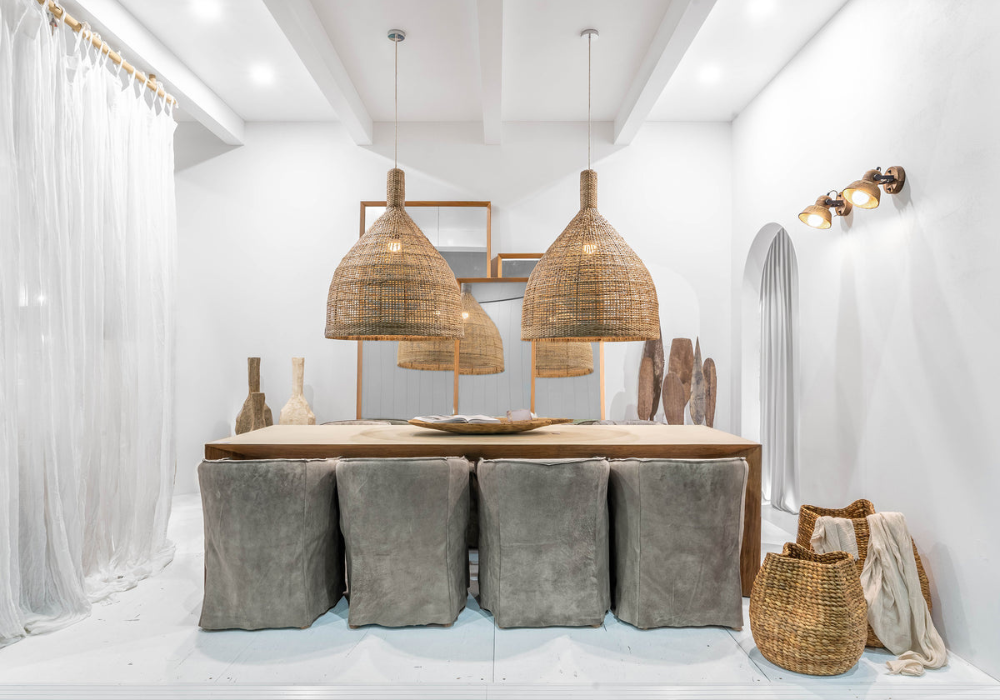
Large woven pendants, natural fibre pendants and organic-shaped designs work particularly well over timber dining tables, creating warmth and texture within the space.
How High Should a Pendant Hang Above a Dining Table?

One of the most important considerations is hanging height.
For most dining rooms:
Position the bottom of the pendant approximately 75–90cm above the tabletop.
This height:
- Maintains clear sight lines across the table
- Creates intimacy and atmosphere
- Prevents glare
- Ensures the pendant remains visually connected to the dining setting
For very high ceilings, the pendant may be hung slightly higher while maintaining visual balance.
Pendant Lighting for Kitchen Islands
Pendant lights are frequently used above kitchen islands to define the workspace while adding style and character.

How Many Pendants Do You Need?
Kitchen Island Up to 2 Metres
- Two medium pendants
Kitchen Island 2–3 Metres
- Two large pendants or three medium pendants
Kitchen Island Over 3 Metres
- Three oversized pendants
Spacing should generally be consistent between each fitting to create a balanced appearance.
Pendant Light Ideas for Living Rooms
Pendant lights are no longer reserved for dining areas.

In contemporary and coastal homes, oversized pendants are increasingly used in living rooms to create a dramatic focal point.
Ideal Locations
- Above a coffee table
- In rooms with raked ceilings
- Open-plan living spaces
- Void areas
- Reading corners
Organic materials such as rattan, woven fibres, timber and handcrafted finishes help soften larger spaces while adding warmth and texture.
Pendant Lighting for Entryways

The entry sets the tone for the entire home.
A statement pendant immediately creates a welcoming first impression and establishes the overall design direction.
For entryways with higher ceilings, larger pendants often have the greatest visual impact.
Popular choices include:
- Woven statement pendants
- Sculptural contemporary pendants
- Organic modern lighting
- Handcrafted natural fibre designs
Choosing the Right Pendant Style
Coastal Style Pendant Lighting
Coastal interiors often feature:
- Natural textures
- Woven materials
- Light timber finishes
- Relaxed organic forms
Large woven pendants help create the effortless, resort-inspired look often associated with Australian coastal homes.
Organic Modern Pendant Lighting
Organic modern interiors blend contemporary design with natural materials.
Look for:
- Curved silhouettes
- Textural finishes
- Handcrafted details
- Sculptural forms
These pieces act as functional artwork while providing ambient lighting.
Contemporary Pendant Lighting
Contemporary homes often suit:
- Clean lines
- Geometric forms
- Minimalist detailing
- Architectural silhouettes
These designs create a refined and sophisticated aesthetic.
Common Pendant Light Mistakes to Avoid
Choosing a Pendant That Is Too Small
This is by far the most common mistake.
A pendant that is undersized can appear disconnected from the furniture below and fail to create the desired visual impact.
Hanging the Pendant Too High
Pendant lights should feel connected to the space they illuminate.
Fixtures suspended too high often lose their presence and fail to create atmosphere.
Ignoring Ceiling Height
Always consider ceiling height when selecting pendant size and suspension length.
Higher ceilings can generally accommodate larger pendants and longer drops.
Forgetting About Scale
Consider the relationship between the pendant, furniture and surrounding room dimensions.
Balance is key.
Frequently Asked Questions
What size pendant light should I choose over a dining table?
A pendant should generally measure approximately one-half to two-thirds the width of the table.
Can a pendant light be too large?
Yes, but most homeowners tend to choose pendants that are too small rather than too large. A well-proportioned oversized pendant often creates a more luxurious and balanced appearance.
How high should a pendant hang above a dining table?
Most pendant lights should hang approximately 75–90cm above the tabletop.
How many pendants should I use above a kitchen island?
This depends on the island length, but two to three pendants are commonly used for most Australian homes.
Are oversized pendant lights still in style?
Absolutely. Oversized statement lighting remains one of the most popular interior design trends for coastal, contemporary and organic modern homes.
Final Thoughts
Pendant lighting is one of the most effective ways to add character, warmth and visual impact to your home. By choosing the correct size, placement and style, you can create a balanced and beautifully designed space that feels both functional and inviting.
Whether you're styling a dining room, kitchen island, living room or entryway, the right pendant light can become a stunning focal point that transforms the entire room.
Explore Magnolia Lane's collection of designer pendant lights and statement lighting, thoughtfully curated for contemporary, coastal and organic modern Australian homes.