How to Remove Stains and Mould from Timber Furniture (Without Damaging the Finish)
Before attempting to clean any timber furniture, it is always best to first check with the supplier or maker to confirm how the piece has been finished. Different finishes—such as oil, wax, lacquer, or polyurethane—can require different care methods, and using the wrong product may damage the surface.
Timber furniture brings warmth, character, and natural beauty into a home. But because wood is a living material, it can occasionally develop stains, water marks, or mould—especially in humid coastal environments.
The good news is that most marks can be safely removed with gentle methods that protect the timber rather than damage it. With the right approach, you can restore the natural beauty of your furniture while preserving its finish and longevity.
This guide walks you through how to remove common stains and mould from timber furniture using simple, safe techniques.
Why Timber Furniture Develops Stains and Mould
Timber naturally absorbs and reacts to its environment. Factors that commonly cause marks or mould include:
-
Humidity and poor air circulation
-
Water spills left sitting on the surface
-
Condensation from cups or vases
-
Storage in damp areas
-
Organic residue from food or plants
These conditions can lead to surface stains, cloudy water marks, or mould growth if moisture remains trapped.
The key is addressing the issue early and using methods that respect the timber’s finish.
Removing White Water Marks from Timber
White rings or cloudy patches are usually caused by moisture trapped in the finish rather than the timber itself.
Method: Gentle Heat Technique
-
Place a clean cotton cloth over the mark
-
Use a hairdryer on a low heat setting
-
Move it slowly over the cloth for 10–20 seconds
-
Check the mark and repeat if necessary
The gentle heat helps release the trapped moisture from the finish.
Tip: Avoid high heat, as it can damage varnish or wax finishes.
Removing Dark Water Stains
Dark stains usually mean moisture has penetrated deeper into the wood.
Method: Baking Soda Paste
-
Mix baking soda with a small amount of water to form a paste
-
Apply gently to the stain
-
Rub lightly with a soft cloth following the grain
-
Wipe clean with a slightly damp cloth
-
Dry immediately
This mild abrasive helps lift stains without harming the timber.
How to Remove Mould from Timber Furniture
If mould appears on timber furniture, it is important to address it promptly while protecting the finish of the piece. Because mould thrives in humid environments, it often develops where airflow is limited or moisture has been trapped against the surface.
Before using any cleaning solution, ensure the furniture is placed in a well-ventilated area and confirm the type of finish used on the timber where possible.
Start with the Gentlest Method
For light mould on sealed timber furniture, begin with a mild cleaning solution:
-
Mix a small amount of mild dish soap with warm water
-
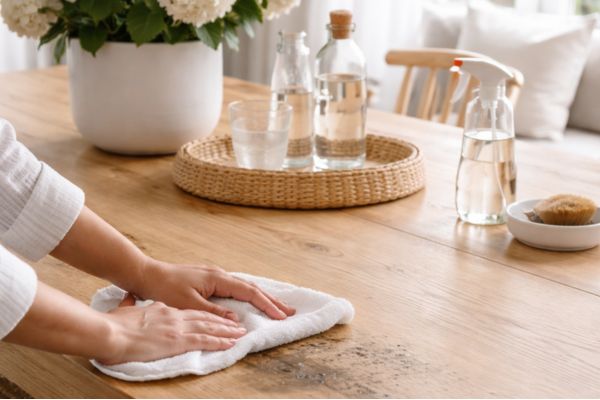
Dampen a soft microfiber cloth (never soak the timber)
-
Gently wipe the affected area following the grain
-
Dry the surface thoroughly with a clean cloth
Often this is sufficient to remove surface mould without disturbing the protective finish.
Natural Solutions for Persistent Mould
If mould remains after gentle cleaning, natural treatments can help inhibit mould spores while remaining relatively safe for sealed timber finishes.
White Vinegar Solution
White vinegar has long been used as a natural mould treatment because its mild acidity helps neutralise mould spores.
-
Mix equal parts white vinegar and water
-
Lightly dampen a cloth with the solution
-
Wipe the affected area gently
-
Dry the surface immediately
Vinegar should be used cautiously on oil or wax finishes, where it may dull the surface over time.
Clove Oil Solution
More recently, clove oil has become widely recommended for mould treatment because it helps inhibit mould regrowth.
-
Mix ¼ teaspoon of clove oil with one litre of water
-
Lightly apply the solution using a cloth or fine mist
-
Leave the solution on the surface for several hours to allow it to act on spores
-
Wipe the area clean and dry thoroughly
Clove oil has a strong scent initially, but this will dissipate as the solution dries.
Important Care Considerations
-
Never soak timber furniture when treating mould
-
Always test any cleaning solution on a hidden area first
-
Ensure the furniture is completely dry after cleaning
-
Improve airflow around the piece to prevent mould returning
Taking a gentle, considered approach helps protect the natural beauty and finish of the timber while effectively addressing mould growth.
Restoring the Timber Finish
Once stains or mould have been removed, nourishing the timber helps restore its natural beauty.
Apply a quality furniture wax or timber conditioner:
-
Enhances the grain
-
Restores moisture balance
-
Protects the surface from future marks
Always test any product on a hidden area first.
Preventing Future Stains and Mould
Protecting timber furniture is largely about managing moisture and airflow.
A few simple habits make a significant difference:
-
Use coasters and placemats
-
Wipe spills promptly
-
Avoid placing timber furniture directly against damp walls
-
Maintain airflow in humid rooms
-
Apply protective wax periodically
These small steps help preserve the natural finish and extend the life of your furniture.
When Professional Restoration May Be Needed
If stains are deeply embedded or mould has penetrated the timber grain, professional restoration may be the safest solution.
An experienced furniture specialist can refinish the surface while preserving the structure and craftsmanship of the piece.
Caring for Timber the Right Way
Quality timber furniture is designed to last for generations. With thoughtful care and gentle cleaning techniques, even unexpected stains or mould can usually be resolved without compromising the integrity of the wood.
Understanding how timber behaves—and responding early when issues arise—ensures your furniture continues to age beautifully within your home.
Care Advice Disclaimer
The care recommendations provided in this article are intended as general guidance for maintaining timber furniture. Because timber finishes and treatments can vary between pieces, it is always advisable to confirm appropriate care methods with the furniture supplier or manufacturer before applying any cleaning solution.
Magnolia Lane cannot guarantee the suitability of these methods for all furniture finishes. Always test cleaning solutions on an inconspicuous area first and discontinue use if any adverse effect occurs.