Dining Table Room Layout: How Many Chairs Fit Around Your Table?
Choosing the right dining table is about more than style. The size of the table, its shape, and the structure of its base all influence how many chairs can comfortably fit around it.
Interior designers approach dining room planning with a clear goal: create a layout that feels generous, functional, and visually balanced. A dining table should allow guests to sit comfortably without overcrowding the space, while also maintaining enough room for movement around the table.
Although table dimensions provide a useful guide, seating capacity is also affected by chair design, table leg placement, and the overall layout of the dining room.
The guide below explains how many chairs typically fit around the most common dining table shapes, along with professional design considerations that ensure a comfortable and practical dining space.

Planning a Dining Room Layout That Works
Before selecting a table shape or size, it helps to understand the spacing guidelines interior designers use when planning dining areas.
Allow Enough Space Per Chair
A common rule used in interior design is to allow approximately 60 cm (24 inches) of table width per chair.
This measurement ensures diners have adequate elbow room and can sit comfortably without feeling cramped.
For wider upholstered chairs or chairs with arms, designers may allow 65–70 cm per seat.
Leave Clearance Around the Table
Comfortable dining rooms also require circulation space around the table.
Interior designers typically recommend:
90–100 cm of clearance between the table edge and walls or furniture.
This allows chairs to be pulled out easily and provides space for people to move around the dining area.

Rectangular Dining Tables: The Most Common Layout
Rectangular dining tables are the most widely used dining table shape because they suit many room layouts and offer flexible seating arrangements.
Their long shape allows chairs to be positioned along both sides of the table, with optional seating at the ends.
Typical Rectangular Table Sizes and Seating
| Table Length | Typical Seating Capacity |
|---|---|
| 120 cm | 4 chairs |
| 150–160 cm | 6 chairs |
| 180–200 cm | 6–8 chairs |
| 220–240 cm | 8 chairs |
| 260–300 cm | 10–12 chairs |
Seating Arrangement Examples
A rectangular table generally seats guests along the long sides first.
Typical layouts include:
-
4-seat table: 2 chairs per side
-
6-seat table: 3 chairs per side, or 2 per side with 1 at each end
-
8-seat table: 3 chairs per side plus 1 chair at each end
When to Add End Chairs
End chairs work best on tables longer than 180 cm. On shorter tables, placing chairs at the ends can reduce leg room and make the table feel crowded.
Round Dining Tables: Flexible and Social Seating
Round dining tables create a balanced seating arrangement where everyone faces each other equally. This shape encourages conversation and works especially well in smaller or square dining rooms.
Round tables also improve circulation because there are no corners to navigate around.
Standard Round Table Sizes
| Table Diameter | Typical Seating Capacity |
|---|---|
| 100–110 cm | 4 chairs |
| 120–130 cm | 4–5 chairs |
| 140–150 cm | 6 chairs |
| 160–180 cm | 6–10 chairs |
Pedestal vs Four-Leg Tables
The base of the table significantly affects seating flexibility.
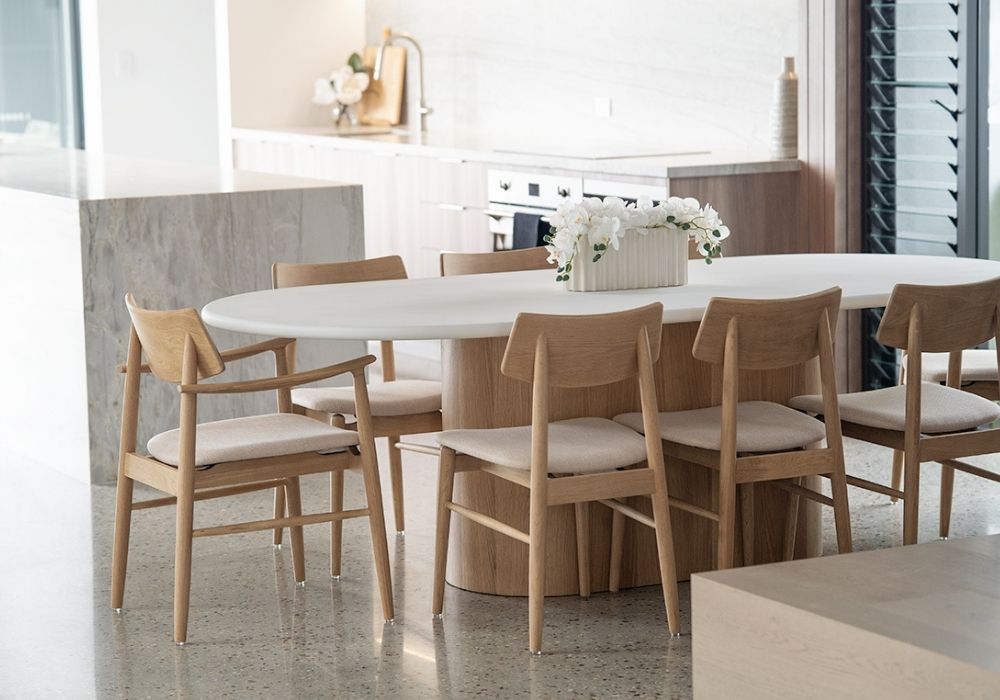
A pedestal base allows chairs to be positioned anywhere around the table without obstruction.
Tables with four legs may restrict where chairs can be placed, often reducing the maximum seating capacity.
Square Dining Tables: Symmetry for Smaller Spaces
Square dining tables create a symmetrical layout that works well in smaller dining rooms, kitchens, or breakfast areas.
They offer a balanced seating arrangement where each side of the table accommodates the same number of chairs.
Common Square Table Sizes
| Table Size | Typical Seating Capacity |
|---|---|
| 90–100 cm | 4 chairs |
| 120–140 cm | 4–8 chairs depending on chair width |
Best Use for Square Tables
Square tables are most comfortable for four diners, where each person sits on one side.
Larger square tables may technically seat eight people, but the distance across the table can sometimes make conversation less comfortable.
Oval Dining Tables: Elegant and Adaptable
Oval dining tables combine the length of rectangular tables with the softer visual lines of round tables.
Because the ends are curved, they often allow additional seating flexibility while maintaining smoother circulation around the table.
Typical Oval Table Seating
| Table Length | Typical Seating Capacity |
|---|---|
| 160–180 cm | 6 chairs |
| 200–220 cm | 6–8 chairs |
| 240–260 cm | 8–10 chairs |
Oval tables are especially useful in narrower dining rooms where a rectangular table may feel too rigid or formal.
Factors That Influence How Many Chairs Fit Around a Dining Table
While table size charts provide a general guideline, the true seating capacity depends on several important design details.
Table Leg Placement
Tables with legs positioned at the corners usually allow more seating along the sides.
Pedestal tables offer the most flexibility because chairs can be positioned freely around the perimeter.
Chair Width and Style
Dining chairs vary widely in width.
Typical measurements include:
-
Slim dining chair: 45–50 cm wide
-
Upholstered chair: 55–60 cm wide
-
Armchair: 60–65 cm wide
Armchairs naturally take up more space and will often reduce the total number of seats that can fit along one side of a table. However, they can add visual balance and a more elevated look when placed at the ends of rectangular tables.
When using armchairs, it’s also important to consider how the arm height interacts with the table structure. As discussed in the section above, some dining tables include a support rail or apron beneath the tabletop. If the armrests sit higher than the clearance beneath the table, the chair may not slide fully underneath, which can affect spacing and comfort at the table.
For this reason, many designers use armchairs selectively — often at the ends of the table — where they create a subtle focal point without restricting seating along the sides.
Chair Shape and Movement
Bulky or heavily upholstered chairs require more space and may limit how many chairs can realistically fit around the table.
Slim, open-frame designs tend to maximise seating capacity.
Armrests and Table Aprons: A Detail That Affects Chair Placement
When using dining chairs with armrests, it’s important to consider how the arms interact with the structure of the table itself.
Many dining tables include an apron or support rail beneath the tabletop. This structural frame runs around the underside of the table and provides stability, but it can also limit how far a chair can slide underneath.
If the armrests sit higher than the clearance beneath the table, the chair will stop at the apron rather than sliding fully under the tabletop. This can cause chairs to sit further away from the table edge than intended, reducing legroom and sometimes making the dining layout feel crowded.
When selecting armchairs for a dining table, designers typically check two key measurements:
Arm height of the chair – the distance from the floor to the top of the armrest.
Apron clearance of the table – the distance from the floor to the bottom of the table’s support rail or apron.
Ideally, the arm height should be at least 2–3 cm lower than the apron clearance so the chair can slide comfortably beneath the table.
Tapered armrests are also worth noting. While they often appear slimmer, the chair will usually only slide under the table until the highest point of the armrest meets the table edge or apron, so this measurement should be used when checking clearance.
Tables with pedestal bases or minimal aprons often work best with armchairs because they allow greater flexibility in chair placement.
For this reason, many designers place armchairs only at the ends of rectangular tables, where the table structure typically allows more space and the chairs can act as subtle focal points without interfering with everyday seating.
Dining Room Spacing Rules Designers Always Follow
Creating a comfortable dining room layout requires more than simply fitting chairs around a table. Interior designers also consider how people move around the space.
Allow Space for Chairs to Move
Chairs should be able to slide out comfortably without hitting walls or nearby furniture.
A minimum clearance of 90 cm around the table ensures this movement remains easy.
Maintain Comfortable Walkways
If the dining table sits within an open-plan space, leaving 100–120 cm of circulation space helps maintain natural walking paths.
Prioritise Comfort Over Maximum Seating
Although tables may technically fit additional chairs, slightly fewer seats often create a more comfortable and visually balanced dining experience.
A well-proportioned dining room feels relaxed and welcoming, allowing guests to linger comfortably at the table.
A carefully planned dining table layout transforms a dining room from simply functional into a space that encourages gathering, conversation, and connection. By considering table shape, dimensions, chair design, and room spacing together, it becomes far easier to select a dining table that suits both the space and the way it will be used every day.
Explore the Magnolia Lane dining room furniture collection to discover thoughtfully designed dining tables and chairs that bring together timeless style, quality craftsmanship, and practical functionality for modern living.