Bedroom Layout: A Guide to a Balanced Main Bedroom
A balanced bedroom layout starts with the bed positioned against a suitable wall, clear pathways to doors and wardrobes, and furniture scaled to the room. Aim for 75–90 cm along main walkways, with around 60 cm beside the bed where space is limited. Choose bedside tables within easy reach and position your rug to provide a soft landing on either side of the bed.
Jump to:
A well-designed main bedroom is more than a place to sleep—it is a private retreat that quietly restores the body and mind. Thoughtful spatial planning transforms a bedroom from a simple arrangement of furniture into a composed environment where movement feels intuitive and the atmosphere feels calm.
At Magnolia Lane, bedroom design begins with proportion, flow, and restraint. When these elements are carefully balanced, the room naturally conveys serenity, elegance, and ease.
In this guide, we explore the essential principles of bedroom layout design — from bed placement and circulation space to rug positioning and furniture scale — so you can create a bedroom that feels both functional and quietly elegant.
The Foundations of a Well-Planned Main Bedroom
The Role of Spatial Planning in Bedroom Design
Spatial planning determines how a bedroom functions long before decorative elements are introduced. It considers the practical choreography of daily life—moving comfortably around the bed, opening drawers with ease, drawing curtains, and navigating the room in low light.
When these relationships are thoughtfully considered, the bedroom feels naturally ordered. Circulation remains clear, furniture feels appropriately scaled, and the room never appears crowded—even when layered with textiles and furnishings.
Most layouts begin by anchoring the bed as the central element, with surrounding furniture positioned to support clear movement throughout the space.
Balancing Functionality with Atmosphere
A well-designed main bedroom must quietly support everyday rituals—reading before sleep, getting dressed in the morning, or simply unwinding at the end of the day.
Furniture placement should allow these routines to happen effortlessly. Bedside tables must be within comfortable reach, drawers should open without obstruction, and walkways should remain unobstructed.
When function is carefully considered, the room feels intuitive rather than arranged.
Designing for Comfort, Calm, and Daily Ritual
Beyond practicality, spatial clarity contributes significantly to the emotional tone of a bedroom. Interiors that feel restful often share similar qualities: balanced proportions, consistent spacing, and uninterrupted sightlines.
Symmetry around the bed, gentle alignment of furniture, and generous breathing room between pieces help cultivate a quiet sense of order.
In many ways, calm bedroom design is defined not only by what is placed within the room—but by the space intentionally left around it.

Ideal Bed Placement: The Anchor of the Room
The bed anchors the bedroom layout, and its placement shapes how the rest of the room functions. When choosing from our beds and bedheads, check the full dimensions of the frame or bedhead against your available wall space and planned walkways.
Positioning the Bed for Visual Balance
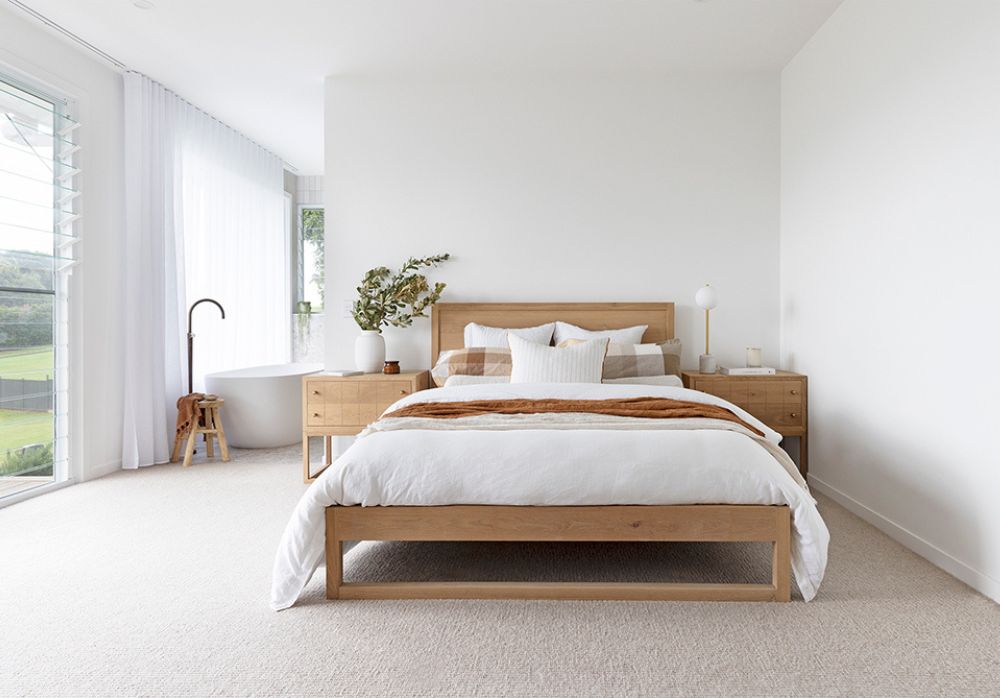
In most layouts, the bed sits centered on the primary wall, often opposite the entrance to create a natural focal point. This orientation establishes symmetry and allows bedside tables to frame the bed gracefully.
When windows are present on the focal wall, the bed may still be centered between them to preserve balance.

Recommended Clearance Around the Bed
The space around your bed should make everyday movement feel easy, from getting dressed to opening wardrobes and making the bed. Measure clearance from the outer edge of the bedframe to the nearest wall or piece of furniture, rather than from the mattress.
Minimum spacing guidelines:
- 60–75 cm (24–30 inches) between the side of the bed and the next obstacle This measurement applies whether the obstacle is a wall, wardrobe, dresser, or other furniture. It creates enough room for comfortable walking alongside the bed.
- 90 cm (36 inches) clearance at the foot of the bed Allow around 90 cm for a comfortable walkway. Check that drawers and wardrobe doors can open fully. If adding a bench, measure the remaining walkway from its outer edge.
- 5–10 cm gap between the mattress/bedframe and bedside tables Bedside tables should sit close enough to reach easily from bed while leaving a small visual gap so the arrangement does not feel crowded.
- 45–60 cm typical width for bedside tables This size maintains proportion with most queen and king beds while leaving sufficient walkway space beyond the table.
- Allow at least 60 cm of clearance between the bedside table and the wall if that side functions as a walkway.
- If the bed is placed near a wall due to room size constraints, maintain a minimum of 45 cm clearance where possible.
It is important to note that circulation space is measured from the outer edge of the bedframe, not the mattress. Beds with extended frames, footboards, or thick upholstered rails may require slightly more room to maintain comfortable movement.
In more generous bedrooms, designers often increase circulation space to 90–100 cm around primary walkways, which creates a noticeably more open and relaxed atmosphere. The additional breathing room allows the bed to feel properly anchored within the space rather than tightly fitted into the room.
Ultimately, these measurements serve as flexible planning benchmarks. The goal is not rigid adherence, but ensuring the bedroom feels balanced, navigable, and quietly comfortable to inhabit.
Navigating Windows, Doors, and Architectural Obstacles
Bedrooms rarely present perfectly symmetrical walls. Doors, wardrobes, and windows can shift the layout slightly.
When this occurs, designers prioritize:
-
Keeping the bed visually centered within the usable wall space
-
Maintaining equal bedside table spacing where possible
-
Ensuring doors and wardrobe openings remain unobstructed
Practical function always outweighs rigid symmetry.
Circulation and Flow: Designing for Effortless Movement
Understanding Circulation Paths
Circulation refers to the invisible pathways people naturally follow through a room. In a bedroom, these typically run from the doorway to the bed, wardrobes, windows, and ensuite entrances.
A successful layout allows these paths to remain open and intuitive.
Minimum Walkway Dimensions for Comfort
For the main routes through your bedroom, aim for 75–90 cm of clear walking space. Around 75 cm can provide a practical passage for one person, while 90 cm feels more generous. These widths do not necessarily allow two people to pass comfortably side by side.
Keep the route from the entrance to the bed, wardrobe and ensuite free of projecting furniture, and check that doors and drawers can open without blocking access.
Avoiding Visual and Physical Clutter
Large bedroom furniture—dressers, benches, or armchairs—should never interrupt primary circulation paths.
Instead, position them along walls or at the foot of the bed where they support the room’s symmetry.
Creating an Intuitive Room Layout
The most elegant bedrooms require little conscious navigation. You instinctively know where to walk, where to place a book, or where to sit.
This quiet ease is the result of thoughtful spatial planning.
Supporting Furniture and Spatial Harmony
Bedside Tables: Size, Scale, and Placement
Bedside tables should sit approximately level with the top of the mattress or slightly higher. This ensures items such as lamps, books, or water are comfortably within reach while seated or lying in bed.
Equally important is choosing a table that feels proportionate to the width of the bed.
Recommended bedside table widths
| Bed Size | Bedside Table Width |
|---|---|
| Queen bed | 45–60 cm |
| King bed | 55–75 cm |
Larger beds benefit from slightly wider tables so the proportions feel balanced and the furniture does not appear underscaled beside the bed.
For the most cohesive layout, bedside tables are typically placed 5–10 cm away from the edge of the bedframe, creating a small visual gap while keeping the surface easily accessible.
Maintaining matching tables on both sides of the bed reinforces symmetry and helps establish the calm, balanced atmosphere often associated with well-designed bedrooms.
Placement of Dressers, Benches, and Occasional Seating
A bench positioned at the foot of the bed provides a practical place to sit, lay out clothing, or add visual layering to the bed arrangement. In most layouts, the bench is placed close to the foot of the bed, typically leaving only a small gap of around 5–10 cm so the furniture feels visually connected rather than floating.
When planning the layout, measure the clear walking space beyond the bench. Aim for 75–90 cm between the bench and the next wall or piece of furniture where this forms a main walkway. If the bench leaves the route feeling cramped, choose a shallower design or leave it out.
This ensures the bench enhances the bed composition while maintaining comfortable circulation through the room.
Dressers typically sit along the longest wall, allowing 90 cm clearance in front for opening drawers comfortably.
Occasional seating—such as a reading chair—works best near windows or unused corners where it forms a quiet vignette rather than interrupting circulation.
Maintaining Visual Breathing Room
A refined bedroom does not fill every wall with furniture. Negative space is essential.
Allowing certain areas of the room to remain open enhances the perception of calm and scale.
Designing a Calm, Cohesive Bedroom Aesthetic
Symmetry and Soft Geometry
Symmetrical arrangements naturally create balance. Matching bedside tables, paired lamps, and centered artwork reinforce a sense of order that feels restful rather than rigid.
Soft curves—through upholstered headboards or rounded lamps—can gently offset the room’s architectural lines.
Layering Materials and Textures
A calm bedroom rarely relies on bold contrast. Instead, it layers subtle textures:
- Linen bedding
- Wool or jute rugs
- Timber bedside tables
- Soft upholstered seating
These tactile variations enrich the space while maintaining visual quietness.
The Value of Negative Space
A beautifully designed bedroom rarely fills every corner with furniture. Allowing areas of open space creates a feeling of calm and proportion.
Luxury interiors often feel serene not because of what is added, but because of what is intentionally left out.
Rug Placement: Three Timeless Layout Approaches
Area rugs soften the architecture of a bedroom while visually anchoring the bed within the space. Their placement should feel intentional and balanced.
Option One: Large Rug Anchoring the Entire Bed Area
The most luxurious approach uses a large rug that sits fully beneath the bed and bedside tables.
Example sizes for this full-bed arrangement:-
Queen bed: 270 × 360 cm rug (9' × 12')
-
King bed: 300 × 400 cm rug (10' × 13')
These are generous example sizes, not minimum requirements. Check the combined width of your bedframe and bedside tables, the length of the arrangement and the available floor space before choosing a rug.
The rug should extend at least 60–75 cm beyond the sides and foot of the bed, creating a soft landing when stepping out of bed.
This option provides the most cohesive visual foundation.
Option Two: Two Runners Along the Bed
For narrower rooms or layered interiors, two runners placed along each side of the bed offer a practical and stylish alternative.
Recommended dimensions:
-
Runners approximately 60–75 cm wide
-
Positioned so they begin slightly in front of the bedside tables
This approach introduces softness without overwhelming the floor area.
Option Three: Partial Rug Placement Beneath the Bed
Another common arrangement places the rug two-thirds beneath the bed, starting just in front of the bedside tables.
This allows:
-
The rug to extend well past the foot of the bed
-
Soft flooring beneath the walking area
-
A visually anchored sleeping zone
This layout works especially well in medium-sized bedrooms.
Creating a Bedroom That Feels Effortlessly Balanced
A beautifully planned main bedroom is not defined by its size but by its proportions, clarity, and calm. With thoughtful spacing around the bed, carefully considered rug placement, and a layout that prioritizes flow, the room evolves into a space that supports both rest and restoration.
At its best, bedroom design is an exercise in restraint—where every element serves comfort, and every detail quietly contributes to a sense of ease.
Explore our curated bedroom collection to discover thoughtfully designed beds, bedside tables, dressers and furnishings created to bring balance, comfort, and quiet elegance to your space.
Need help choosing furniture that fits your bedroom? Contact Magnolia Lane with your room measurements and the pieces you’re considering, and we can help you compare dimensions before ordering.