Living Room Rug Size Guide: How to Choose the Right Rug Size & Layout
Create a living room that feels beautifully balanced with our interior designer's guide to rug size, placement and proportion. Learn the styling principles professionals use to make any living room feel more spacious, connected and inviting.
Have You Ever Wondered Why Some Living Rooms Just Feel Right?
Some living rooms instantly feel calm, welcoming and beautifully balanced.
Every piece feels like it belongs.
It's rarely because of one beautiful sofa or statement coffee table.
More often, it's because every element has been thoughtfully considered — and one of the biggest contributors is something many people overlook:
The rug.
A well-proportioned rug quietly anchors your entire living room. It creates structure, defines the seating area and allows every piece of furniture to work together as one cohesive space.
When it's too small, even premium furniture can feel disconnected.
When it's the right size, the room immediately feels calmer, more inviting and effortlessly balanced.
At Magnolia Lane, we believe beautiful homes aren't created by filling a room with furniture—they're created by choosing pieces that work together in harmony. A thoughtfully chosen rug is one of the simplest ways to bring a living room together, creating balance between your sofa, coffee table and occasional seating, whether you're styling a relaxed coastal home, a contemporary apartment or a spacious family living room.
In this guide, we'll share the same design principles we use when helping customers plan beautifully proportioned living spaces, so you can confidently choose a rug that complements your furniture, suits your room and creates a beautifully balanced living space.
Magnolia Lane's Five Golden Rules for Living Room Rugs
If you're looking for a quick answer, these five principles will help you avoid the most common rug sizing mistakes.
1. Choose the largest rug your room comfortably allows
A slightly larger rug will usually create a more balanced and luxurious feel than one that's too small. The key is choosing a size that's proportionate to both your room and furniture.
2. Your coffee table should sit completely on the rug
The rug should anchor the seating area, with the coffee table comfortably positioned within its boundaries.
3. Wherever possible, place the front legs of your seating on the rug
Having the front legs of your sofa and occasional chairs resting on the rug helps visually connect the furniture and define the living zone.
4. Measure your space before you buy
Professional stylists often use painter's tape to outline a rug on the floor before purchasing. It's one of the easiest ways to visualise scale and furniture placement.
5. Think about the room as a whole
Rather than choosing a rug in isolation, consider how it will work with your sofa, coffee table, entertainment unit and lighting. Beautiful interiors are created through thoughtful proportions.
Save this guide or pin it to Pinterest if you're planning a renovation, furnishing a new home or updating your living room in the future.
Why Rug Size Matters More Than Colour
When people begin styling a living room, the sofa is usually the first piece they choose.
From there, the coffee table, entertainment unit and occasional chairs naturally follow.
The rug often comes later.
And that's perfectly okay.
Where many people run into trouble is trying to fit a rug into a room that's already furnished without considering how it connects the furniture together.
Rather than thinking of your rug as a finishing touch, think of it as the element that brings the entire room together.
A well-proportioned rug visually anchors your seating arrangement, creating a sense of balance between your sofa, coffee table and occasional chairs. It defines the living zone, softens hard flooring and helps every piece feel like it belongs.
When the rug is too small, even beautifully chosen furniture can appear disconnected.
When it's the right size, the room immediately feels calmer, more inviting and thoughtfully designed.
That's why we encourage our customers to choose a rug that complements the furniture they already have—or the furniture they're planning to invest in—rather than selecting it in isolation.
It's one of the simplest ways to elevate a living room without changing everything else.
The Three Living Room Rug Layouts We Recommend
There's no single "perfect" rug layout for every home.
The best option depends on your room size, furniture arrangement and how you use the space.
These are the three layouts we recommend most often.

Layout One: All Legs on the Rug
Best for: Spacious living rooms, open-plan homes and anyone wanting a luxurious, designer-inspired look.
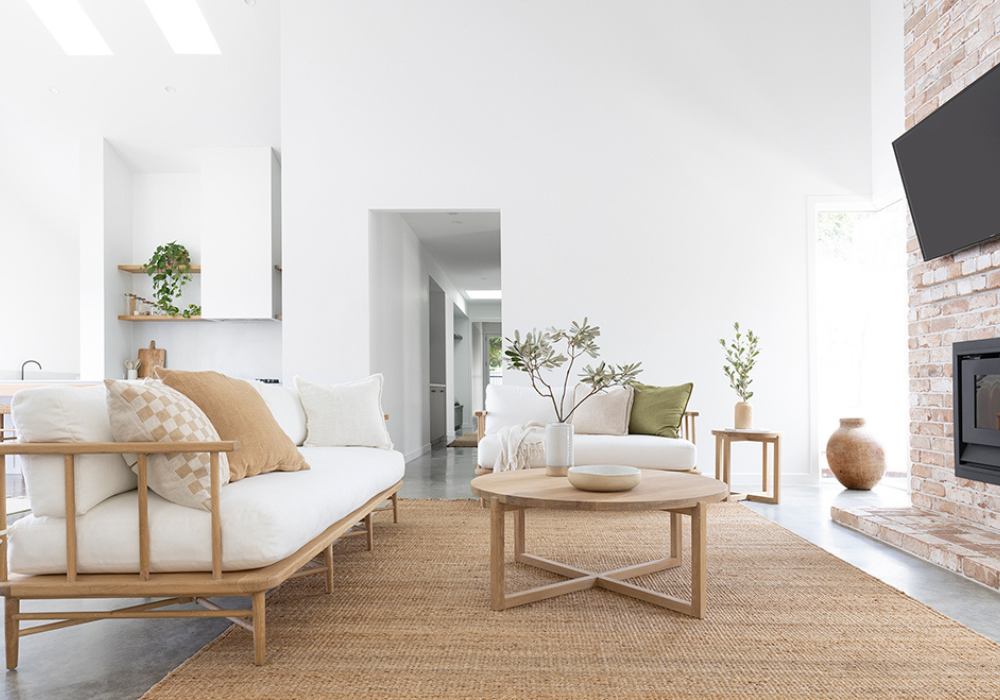
If your room allows, this is the layout we recommend most often. It's the arrangement you'll see in beautifully styled homes because it creates a sense of calm and visual balance throughout the room.
The rug sits beneath the sofa, coffee table and occasional chairs, allowing all furniture to rest comfortably on the rug. This creates one beautifully connected living zone, where every piece feels intentionally placed rather than standing alone.
A larger rug also helps define the seating area within open-plan homes, creating a sense of structure while allowing the room to feel calm, cohesive and inviting.
Why it works
- Creates the most balanced and luxurious living room layout.
- Visually connects all furniture into one cohesive seating area.
- Helps open-plan spaces feel more defined.
- Makes the room feel larger and more spacious.
- Allows statement furniture and natural materials to become the focal point.
Magnolia Lane Designer's Tip
One of the easiest ways to elevate a living room isn't buying more furniture—it's choosing a rug that's properly proportioned. A generously sized rug gives your furniture room to breathe, creating a relaxed, refined space that feels effortlessly designed.
Layout Two: Front Legs on the Rug
Best for: Medium-sized living rooms

This layout is ideal when your room doesn't comfortably accommodate a larger rug but you still want to create a connected seating area.
Only the front legs of the sofa rest on the rug, while the coffee table remains fully positioned within its boundaries.
The result is balanced, practical and perfectly suited to many Australian family homes.
Why it works
- Maintains visual connection between furniture.
- Shows more of your flooring.
- Creates a spacious feel.
- Works beautifully with three-seater sofas.
Layout Three: Coffee Table on the Rug
Best for: Compact apartments and smaller living rooms
In smaller spaces, placing only the coffee table on the rug can still introduce warmth and texture without overwhelming the room.
While this is the most compact option, we generally recommend moving up to a larger rug if your room allows.
Even one size larger can make a remarkable difference to the overall feel of the space.
Common mistake
If your rug is almost the same size as your coffee table, it's likely too small to anchor the room effectively.
Living Room Rug Size Checklist
Before choosing your rug, use this simple checklist to make sure your layout will feel balanced, practical and beautifully proportioned.
✅ Your coffee table sits completely on the rug.
✅ At least the front legs of your sofa sit on the rug (or all furniture for larger living rooms).
✅ The rug anchors the entire seating arrangement, rather than sitting beneath the coffee table alone.
✅ A consistent border of flooring remains visible around the outside of the rug where possible.
✅ Walkways remain clear so the room feels comfortable and easy to move through.
Magnolia Lane Tip: If you can tick every box above, you've already avoided the most common living room rug mistakes.
How to Choose the Right Rug Size
While standard rug sizes provide a helpful starting point, the best choice always depends on the size of your room, the footprint of your furniture and the feeling you'd like to create.
As a general guide, larger rugs create a more cohesive and spacious appearance because they visually connect your furniture rather than allowing each piece to sit independently.
| Living Room | Recommended Starting Rug Size |
|---|---|
| Apartment or compact living room | 160 × 230 cm |
| Average Australian living room | 200 × 300 cm |
| Large family living room | 250 × 350 cm |
| Spacious open-plan living area | 300 × 400 cm or larger |
These dimensions are intended as a guide only. Before purchasing, measure your room and consider how the rug will relate to your sofa, coffee table and surrounding walkways.
Magnolia Lane Designer's Tip
Don't choose a rug based solely on the size of your room. Choose it based on the furniture you want it to anchor.
Choosing the Right Rug Size for Your Sofa
Your sofa is typically the largest piece of furniture in the living room, making it the easiest place to begin when planning your layout.
Two-Seater Sofa
A 160 × 230 cm or 200 × 300 cm rug often works well, depending on the overall size of the room.
Aim for the coffee table to sit comfortably on the rug while allowing the front legs of the sofa to overlap.
Three-Seater Sofa
For many Australian homes, a 200 × 300 cm rug creates balanced proportions.
This size comfortably accommodates the coffee table while visually connecting the seating area without overwhelming the room.
L-Shaped Sofa
Corner lounges naturally create a larger seating zone, so they generally benefit from a larger rug.
A 250 × 350 cm rug is often an excellent starting point, allowing the rug to extend beneath both sections of the sofa while framing the coffee table.
Modular Sofa
Modular lounges deserve generous proportions.
Because modular seating creates a substantial footprint, a larger rug helps prevent the room from feeling fragmented and allows the furniture arrangement to feel intentional.
If space allows, don't be afraid to size up.
How Much Floor Should You Leave Around a Rug?
One question we're often asked is:
"Should the rug cover most of the floor?"
Not necessarily.
A well-proportioned rug should comfortably anchor your seating arrangement while allowing some of your flooring to remain visible around the outside. This helps frame the living area, creates a lighter, more balanced feel and showcases beautiful timber flooring where appropriate.
Rather than focusing on exact measurements, aim for a consistent border of exposed flooring wherever possible. Every living room is different, so proportion is far more important than following a fixed rule.
Magnolia Lane Tip
When a rug is too small, the room can feel disconnected. When it's too large, it can overwhelm the space. The goal is to choose a rug that feels in proportion to both your furniture and the room itself.
Before You Buy: Measure Like an Interior Designer
One of the simplest styling techniques we recommend doesn't involve expensive software or complicated floor plans.
It starts with a roll of painter's tape.
Outline the dimensions of your proposed rug directly on the floor before you purchase.
This allows you to quickly visualise:
-
Furniture placement
-
Walkways through the room
-
Coffee table position
-
Sofa proportions
-
Overall balance
If you're deciding between two rug sizes, tape out both options.
Seeing them in your own home is often all it takes to make the right decision.
Five Living Room Rug Mistakes to Avoid
Even beautifully furnished homes can feel slightly "off" when the rug isn't working with the furniture.
Here are the mistakes we see most often.
Choosing a Rug That's Too Small
The most common mistake by far.
A rug that's too small visually shrinks the room and makes furniture appear disconnected.
If you're choosing between two suitable sizes, the larger option will usually create a calmer and more cohesive result.
Floating All the Furniture
When none of the seating touches the rug, the living room can feel fragmented rather than connected.
Whenever possible, allow at least the front legs of your sofa and chairs to sit on the rug.
Choosing the Rug Last
Many people purchase the sofa, coffee table and entertainment unit first before trying to make a rug fit the remaining space.
Instead, think about the room as one complete design.
Planning your layout early makes it much easier to choose furniture with the right proportions.
Forgetting About Walkways
A beautiful room should also function beautifully.
Leave enough space for comfortable movement around the furniture while maintaining a balanced border of exposed flooring.
Ignoring Scale
Large modular lounges, oversized coffee tables and generous entertainment units all require a rug with enough presence to visually support them.
The larger your furniture, the more important scale becomes.
Magnolia Lane Designer's Styling Tips
These are simple principles we use when helping customers create relaxed, timeless living spaces.
Layer natural textures
Timber, linen, woven fibres, ceramics and natural stone create warmth and depth without feeling over-styled.
Let your furniture breathe
Avoid filling every corner of the room.
Thoughtful spacing often creates a more luxurious feel than adding another piece of furniture.
Choose furniture with similar visual weight
A substantial coffee table pairs beautifully with a generously sized rug, while delicate furniture suits lighter, more open layouts.
Think beyond one purchase
The most beautiful living rooms evolve as a collection rather than a series of individual purchases.
Every piece should complement the next.
Frequently Asked Questions
What size rug is best for most living rooms?
For many Australian homes, a 200 × 300 cm rug is a popular starting point. However, the ideal size depends on your furniture layout and room proportions.
Should a rug go under the sofa?
Ideally, yes.
Having the front legs of your sofa positioned on the rug creates a more connected and balanced seating area.
Should the coffee table sit completely on the rug?
Yes.
Your coffee table should sit comfortably within the rug boundaries so it helps anchor the furniture arrangement.
Is it better to choose a rug that's too big or too small?
If both sizes work within your room, the larger rug will generally create a more cohesive and spacious feel.
How do I know if my rug is too small?
If your coffee table barely fits on the rug or none of your furniture touches it, it's probably undersized for the space.
Does a larger rug make a room look bigger?
Often, yes.
A well-proportioned rug helps define the living area and creates the illusion of a larger, more open room.
Complete Your Living Room
Choosing the right rug size is only the first step in creating a beautifully balanced living room.
Once you've established the proportions of the space, selecting complementary furniture becomes much easier.
If you're planning a complete living room refresh, these Magnolia Lane guides will help you confidently choose pieces that work together.
Continue Reading
-
Coffee Table Size Guide – Discover how to choose the perfect coffee table size for your sofa and room layout.
-
Entertainment Unit Size Guide – Learn how to select the right entertainment unit for your television and living room.
-
Pendant Light Size Guide – Find the ideal pendant size for open-plan living spaces.
Explore Our Living Room Collections
Whether you're furnishing a new home or updating an existing space, our curated collections are designed to help you create interiors that feel relaxed, timeless and beautifully considered.
Browse our collections of:
Every collection has been thoughtfully curated to complement contemporary Australian homes, making it easier to create a living room that's both practical and effortlessly beautiful.
Create a Living Room That Feels Beautifully Balanced
The most memorable living rooms aren't defined by trends—they're defined by balance.
When your rug, furniture and lighting are all in proportion, the room naturally feels more welcoming, more comfortable and more enjoyable to spend time in.
Start with the right foundation, take time to plan your layout, and allow each piece to work together.
Beautiful homes are rarely created by chance. They're created through thoughtful decisions, one layer at a time.